Building with AI · · 6 min
Why data sovereignty is the foundation of the AI era
Most businesses are building their AI future on rented land. Data sovereignty isn't a feature — it's an architectural decision that determines whether your AI compounds for you or for someone else.
In short
AI is operational, not experimental. But most businesses are building their AI future on rented land - feeding strategy, customer data, and intellectual property into platforms they don't control. Data sovereignty means your AI operates inside a private environment you own. As AI becomes the operating layer of business, who owns that layer becomes existential. The organizations that thrive will be the ones that build compounding knowledge inside environments they control.
Own Your Data. Own Your Future.
Artificial intelligence is no longer experimental. It is operational.
Businesses are using AI to draft content, analyze customers, automate workflows, write code, manage support tickets, and build internal knowledge systems. Founders are running leaner teams. Agencies are scaling output. Operators are compressing weeks of work into hours.
We are entering the most powerful technological era in modern business.
But most companies are building it on rented land.
They are feeding their strategy, internal documentation, customer data, and intellectual property into tools they do not control. They are connecting workflows across fragmented platforms. They are trusting third parties to store and process their most valuable digital assets.
And almost no one is asking the most important question:
Who owns the system that now runs your business?
At Genuai, that question is the reason we exist.
The invisible tradeoff in today’s AI adoption
AI tools are convenient. They are powerful. They are easy to access.
But convenience often comes with a hidden cost.
Today, most businesses use a collection of disconnected SaaS platforms. Documents live in one system. Notes live in another. Automation runs in a third. Chat history exists in a fourth. Customer information sits somewhere else entirely.
The result is fragmentation.
AI performs best when it has context. The more it understands about your operations, your strategy, your clients, and your internal knowledge, the more useful it becomes. But fragmentation limits context. Privacy concerns limit what teams feel comfortable sharing. Sensitive data often stays siloed or off limits.
The outcome is predictable. AI becomes a surface level assistant instead of a true operational partner.
Some founders try to solve this by self hosting powerful tools. They attempt to run open source models. They experiment with automation frameworks. They stitch together systems manually.
But self hosting is technically demanding. It requires time, maintenance, security hardening, updates, backups, and constant troubleshooting. Most business owners do not have the resources or desire to become infrastructure engineers.
So they compromise.
They accept partial automation. They accept limited context. They accept exposure to platforms that monetize attention and data.
This is the quiet tradeoff shaping the AI era.
And it is not sustainable.
Data is not a byproduct. It is leverage.
Your data is not just information.
It is your operating memory. It is your customer intelligence. It is your workflow logic. It is your institutional knowledge. It is your strategic advantage.
Over time, it compounds.
Every process you document, every client interaction you log, every automation you refine adds to a growing body of leverage. When structured correctly, that leverage turns into speed. Speed turns into capacity. Capacity turns into growth.
But only if you own it.
If your data lives scattered across platforms that can change policies, pricing, or access rules at any time, you do not truly control the system you are building. If your AI relies on third party environments that you cannot audit or secure, you are outsourcing the foundation of your future.
We believe businesses deserve better.
We believe people and organizations should own their data. Not rent it. Not lose visibility into it. Not hand it over in exchange for convenience.
This belief is called data sovereignty.
And it is the core principle behind Genuai.
What data sovereignty really means
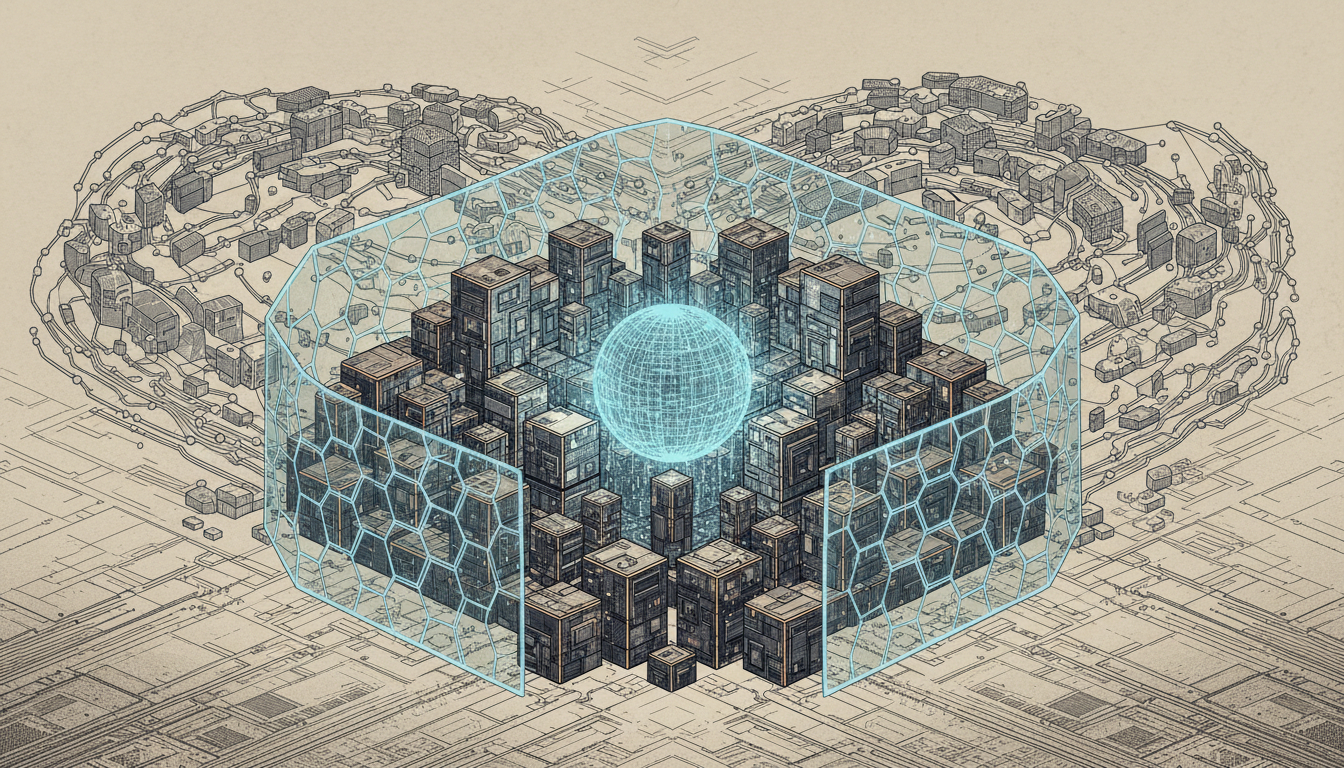
Data sovereignty is not a marketing phrase. It is an architectural decision.
It means your AI operates inside a private environment. It means your files are encrypted at rest and in transit. It means your data is not shared with third parties. It means your knowledge base compounds over time within a system you control. It means your workflows run in a space built for you, not for ad revenue or platform lock in.
It is the difference between building on land you own and building on land you lease.
When you own the land, you can design long term. You can invest in structure. You can expand confidently. You can build systems that serve you for years.
When you lease the land, you are always subject to change.
Data sovereignty creates stability in an era of rapid technological acceleration.
It ensures that as AI becomes more powerful, your control increases alongside it instead of diminishing.
The agentic future is coming
AI is moving beyond simple prompts.
We are entering the age of agents.
- Agents that monitor workflows.
- Agents that execute tasks autonomously.
- Agents that trigger automations.
- Agents that manage knowledge.
- Agents that operate in the background while you focus on high level thinking.
This is the agentic future.
In this future, AI is not a tool you open occasionally. It is a layer embedded into your operations. It acts on your behalf. It coordinates systems. It improves processes over time.
But there is a critical insight that few are discussing.
Agents require trust and context.
For an AI agent to manage your scheduling, coordinate your projects, analyze your financial data, or respond to customers, it must have deep access to your information.
If that agent runs inside a platform you do not control, you are placing operational authority outside your own environment.
The agentic future only works if your agents operate within a space you own.
Otherwise, autonomy becomes dependency.
Why we built Genuai
We saw the gap.
We saw business owners excited about AI but overwhelmed by infrastructure. We saw teams struggling with fragmented tools. We saw privacy concerns limiting adoption. We saw founders who wanted full control but did not want to become system administrators.
So we built a managed private AI workspace.
Genuai deploys a secure environment for your business. It integrates your existing tools. It provides workflow automation. It offers a private knowledge base. It includes secure file storage. It supports AI chat and extensible applications. It allows you to connect your existing subscriptions or run private open source models for greater control.
All within a space that is encrypted and isolated.
You do not have to piece it together. You do not have to maintain the infrastructure. You do not have to compromise on ownership.
You get the power of advanced AI systems inside a sovereign environment.
This is not about hype. This is about infrastructure.
It is about building an operational foundation that supports compounding intelligence instead of leaking it.
A different kind of AI company
Many companies compete on features.
Faster responses. Bigger models. More integrations. More automation templates.
Features matter. But philosophy matters more.
Genuai is built on a principle.
Own your data. Own your future.
We believe privacy fuels innovation. When teams know their information is secure and controlled, they share more context. When they share more context, AI becomes more useful. When AI becomes more useful, automation becomes real.
We believe businesses should not have to choose between power and privacy.
We believe the future of AI is not centralized control. It is distributed sovereignty.
We believe the organizations that thrive in the next decade will be the ones that build compounding knowledge inside environments they own.
Building for the long term
Technology cycles move quickly. Platforms rise and fall. Interfaces change. Pricing shifts. Trends fade.
But ownership endures.
When you control your infrastructure, you are not at the mercy of every shift in the market. You can adapt on your terms. You can integrate new models as they emerge. You can refine workflows without rebuilding from scratch. You can treat AI not as a novelty but as a permanent layer of your operations.
Genuai is designed for that horizon.
Not just for the next quarter. Not just for experimentation. But for the long term evolution of your business.
We are building for founders who think beyond tools. For operators who want repeatable systems. For agencies that manage complex client contexts. For teams who understand that knowledge, when structured and secured, becomes an asset that compounds.
The commitment
This is the standard we hold ourselves to.
Your data remains yours. Your workspace is private. Your knowledge compounds. Your AI operates within your control.
We are not building a platform that extracts value from your information.
We are building infrastructure that helps you multiply it.
The AI era will define the next generation of businesses.
Some will build on rented land and accept the tradeoffs.
Others will choose sovereignty.
We know which future we are building for.
Own your data. Own your future.
And build the agentic systems that work for you, inside an environment you control.
Welcome to Genuai.
Written by Martin Ronquillo, founder of Genuai. He reads every reply.
Send me Sunday's noteA short note · every Sunday
The Sunday Alignment
For the Sunday night when the week already feels heavy. One short note before Monday: three minutes, one thing to do. By Thursday you have done it once.
You're in. The next note lands Sunday.
Something went wrong. Please try again.
One email a week. Free. Unsubscribe in one click.