
Building with AI · · 4 min
Your revenue has a ceiling. It's not strategy.
The nervous system has a capacity ceiling. Self-sabotage at the ceiling isn't failure. It's biology. The operator is part of the infrastructure.
In short
You have done the strategy work. You have built the systems. And then the self-sabotage shows up at the same revenue threshold every time. This is not a discipline problem. It is a capacity problem. The nervous system has a ceiling, and pushing harder will not move it. The wire was always too thin. The work is to thicken it before the next load goes on.
You’ve read the books. You’ve done the strategy work. You know what a $500K year looks like on paper. Maybe you’ve even built the systems to get there.
And then the self-sabotage shows up: procrastination on the call that matters, a fight with your business partner over nothing, illness the week of the launch, decisions you knew were wrong while you were making them.
This isn’t a discipline problem. It’s a capacity problem.
Capacity is infrastructure. The operator is part of the system, and the system is calibrated to whatever the operator can hold.
Operator infrastructure is the usual subject here. Systems, automations, delegation. None of those run any better than the operator running them. The owner’s nervous system is the operator’s own infrastructure.
The ceiling you can’t see on a spreadsheet
Your nervous system has a capacity ceiling. It’s the maximum level of complexity, stress, visibility, and responsibility your body can regulate before it starts shutting things down. That’s how nervous systems respond to overload.
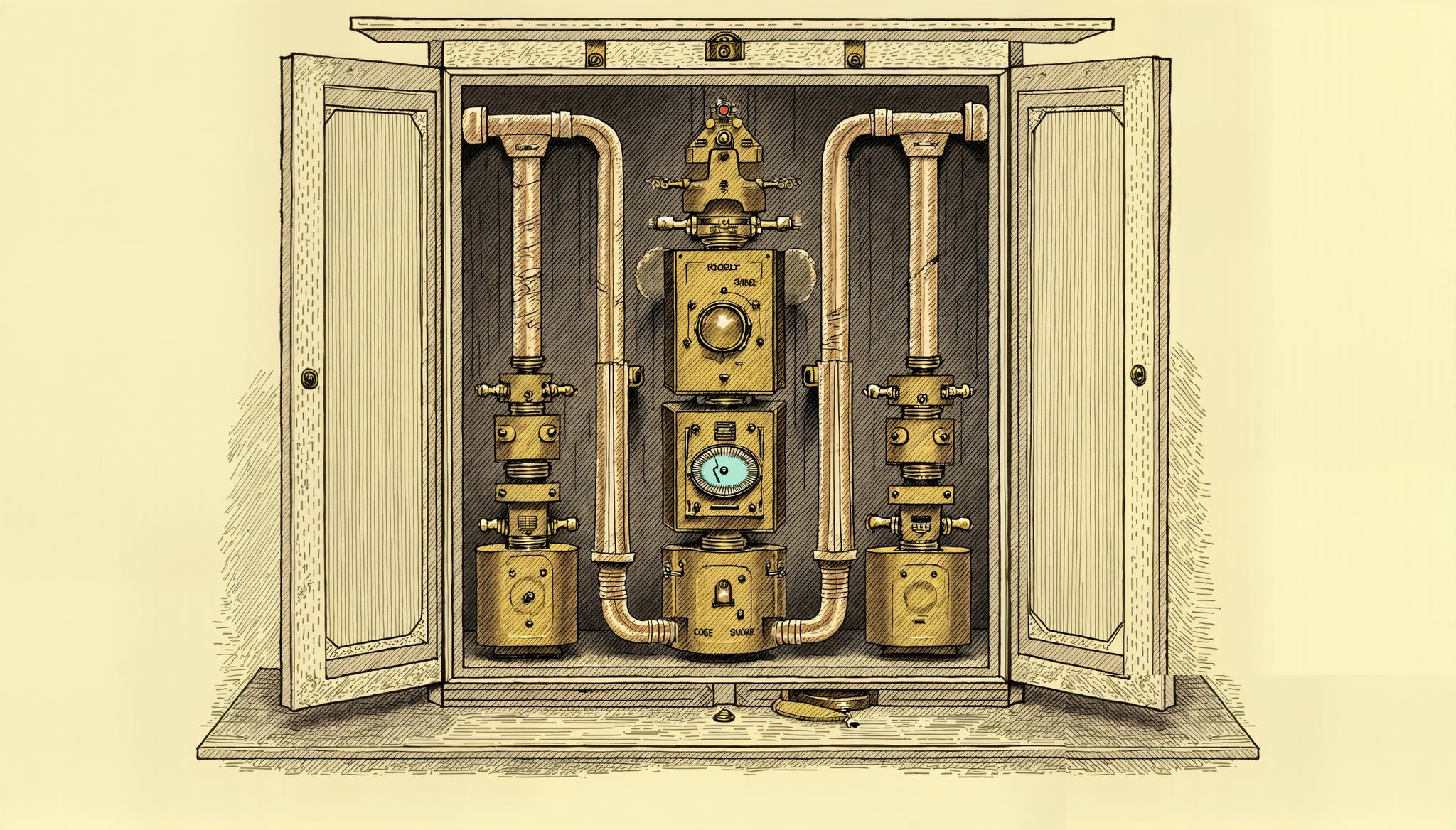
Think of it like electrical wiring. You can run a small business on thin wire just fine. Modest revenue, a few clients, manageable stress. The current flows. But when you scale (more team members, bigger contracts, more visibility, more pressure) you’re pushing more current through that same wire.
The wire overheats. It trips the breaker.
That breaker looks like anxiety before a big opportunity. It looks like bad hiring decisions you wouldn’t normally make. It looks like burning out three months into your best quarter ever. It looks like selling the company at a discount because you simply can’t hold it anymore.
The wire is the right wire. It is too thin for the current you are now pushing through it.
Self-sabotage is data
Here’s what most people miss. Every time you’ve self-sabotaged at an income threshold, you’ve generated useful information. That threshold marks the exact edge of your nervous system’s capacity at that moment.
Walls hit at recurring income thresholds are not coincidences. They mark the edge of what the operator’s nervous system can currently regulate. The number isn’t random. It is where the body says “I can’t regulate this.”
Most operators treat this moment as a personal failing. They push harder, white-knuckle through the anxiety, build more systems, hire more people, and crash again at the same number. Or slightly above it, which feels like progress until the crash is bigger.
This is the standard playbook: force, break, recover, repeat. It works until it doesn’t. And “doesn’t” usually looks like chronic health problems at 38, a divorce, or selling the thing you spent five years building because you can’t stand running it anymore.
This post will not land for the operator who reads “build the wire thicker” as one more piece of mindset advice to add to a stack. The work below is for operators who already suspect their constraint is structural.
Make the wire thicker first
The bottleneck was never the business model.
Instead of pushing more current through the same wire, you expand the wire’s capacity before you add more load. You train your nervous system to hold more before you ask it to.
This is somatic discipline, not talk therapy. Body-based practice that changes baseline regulation.
Breathwork is the entry point most operators can relate to, because you can measure it. The BOLT score (Body Oxygen Level Test) gives you a number: how long you can comfortably hold your breath after a normal exhale. Most stressed operators score around 15 to 20 seconds. A well-regulated system sits at 40 or above.
I started at about 30 seconds of uncomfortable breath holds. Within days of consistent practice, I was sitting comfortably at 90 seconds. The wire was thickening in real time. My CO2 tolerance went up, my baseline anxiety dropped, and my ability to sit with discomfort (the kind that shows up when you’re negotiating a big contract or making a hard personnel call) expanded in a way I could actually feel.
Other practices move the needle. Grounding (bare feet on dirt or grass for 20 minutes) shifts sleep quality and the stress response within two weeks. The mechanism is debated. The effect is measurable. Beyond that, the specific modality matters less than the consistency. Somatic discipline, practiced on a schedule, is what trains the system to hold more.
None of these are complicated. They’re just not on the standard “how to scale your business” curriculum.
The metric nobody tracks
Most operators obsess over revenue, margins, churn, conversion rates. All useful numbers. But there’s a metric underneath all of them that determines how far those numbers can actually go.
How much capacity does the operator have to hold what they’re building?
If the honest answer is “I’m already at the edge,” then the next strategy play, the next hire, the next product launch is just more current through a wire that’s already hot. You might get a temporary spike. You won’t sustain it.
Expand the capacity first. A regulated nervous system makes better decisions, handles stress without fragmenting, and doesn’t sabotage opportunities that feel too big. Revenue follows capacity. The mechanism is the operator, not the offer.
The real bottleneck
You probably don’t need another marketing framework. You don’t need a better funnel. You might not even need more leads.
You might need a nervous system that can hold what you’ve already built, plus what’s coming next.
The wire was always too thin. You just needed to thicken it.
Written by Martin Ronquillo, founder of Genuai. He reads every reply.
Send me Sunday's noteA short note · every Sunday
The Sunday Alignment
For the Sunday night when the week already feels heavy. One short note before Monday: three minutes, one thing to do. By Thursday you have done it once.
You're in. The next note lands Sunday.
Something went wrong. Please try again.
One email a week. Free. Unsubscribe in one click.